Best Time to Visit Morocco
Best Time to Visit Morocco by Season
Overview
Morocco travel tips. This guide will walk you through Morocco’s climate in different regions, seasonal highlights, travel tips, and activities to help you plan your trip.
Morocco’s Climate Overview
- Coastal cities like Casablanca, Rabat, and Essaouira have mild winters and warm summers. The Atlantic Ocean helps keep temperatures comfortable so that you can visit any time of year.
- Inland cities such as Marrakech, Fes, and Meknes get hot in the summer and cooler in the winter. Temperatures can change a lot from day to night, especially in the desert.
- The Atlas Mountains have snowy winters that are great for skiing. In the summer, they offer a cool escape from the heat.
- The Sahara Desert, including places like Merzouga and Zagora, has extreme temperatures. It gets very hot during the day and cold at night. For a comfortable and safe trip, visit during the milder months.
Best Time to Visit Morocco by Season
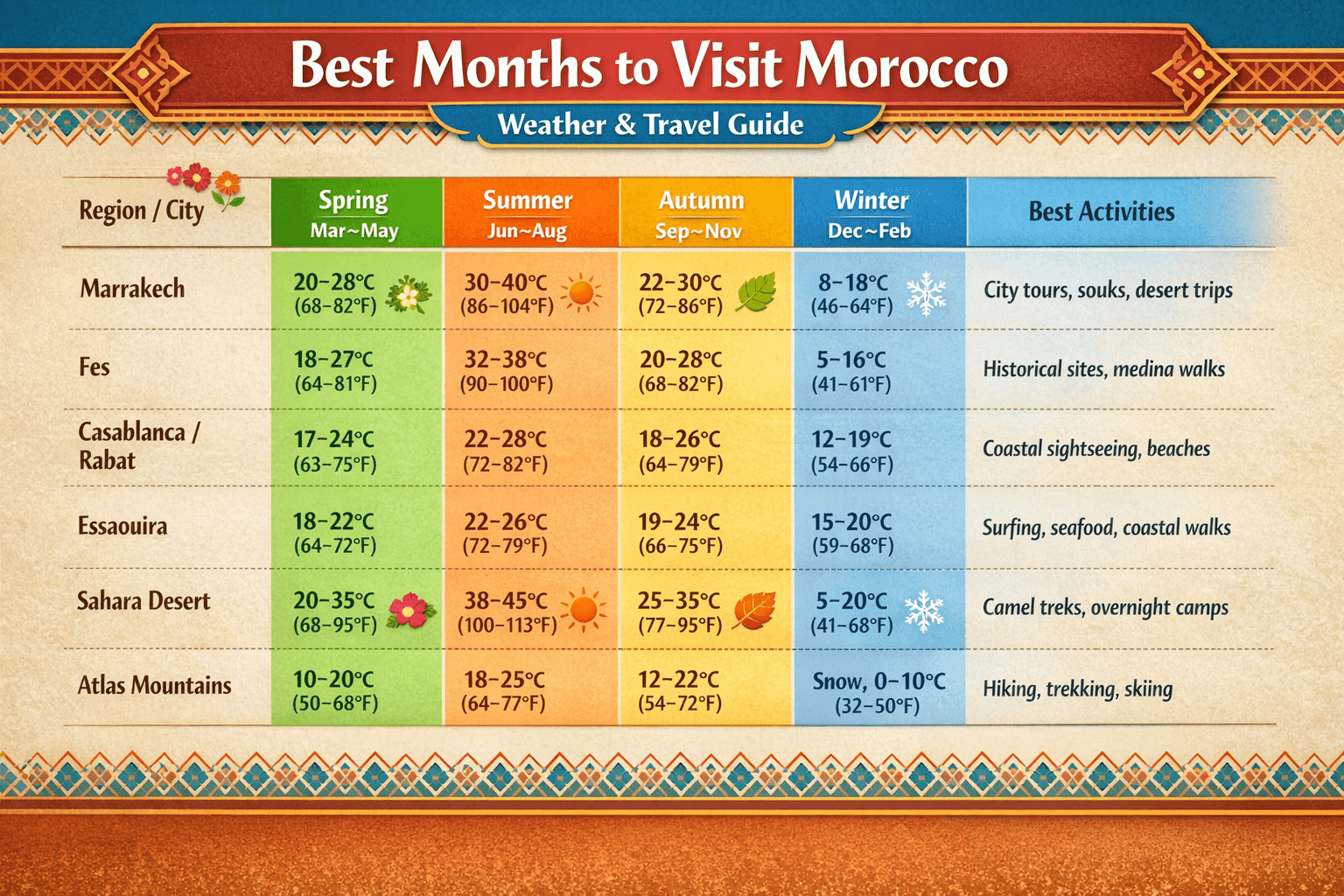
| Region / City | Spring (Mar–May) | Summer (Jun–Aug) | Autumn (Sep–Nov) | Winter (Dec–Feb) | Best Activities |
|---|---|---|---|---|---|
| Marrakech | 20–28°C | 30–40°C | 22–30°C | 8–18°C | City tours, souks, desert trips |
| Fes | 18–27°C | 32–38°C | 20–28°C | 5–16°C | Historical sites, medina walks |
| Casablanca / Rabat | 17–24°C | 22–28°C | 18–26°C | 12–19°C | Coastal sightseeing, beaches |
| Essaouira | 18–22°C | 22–26°C | 19–24°C | 15–20°C | Surfing, seafood, coastal walks |
| Sahara Desert | 20–35°C | 38–45°C | 25–35°C | 5–20°C | Camel treks, overnight camps |
| Atlas Mountains | 10–20°C | 18–25°C | 12–22°C | Snow, 0–10°C | Hiking, trekking, skiing |
Spring (March to May) – Ideal Time for Most Travelers
- Marrakech: 20–28°C (68–82°F)
- Fes: 18–27°C (64–81°F)
- Sahara Desert: 20–35°C (68–95°F)
- The weather is comfortable for exploring both cities and the desert.
- It’s a great season for trekking in the Atlas Mountains.
- There are fewer crowds than in the busy summer months.
- Some places in Europe and Morocco get busier during school holidays.
- You can go camel trekking in Merzouga and Zagora.
- It’s a good time to explore Marrakech, Fes, and Meknes in the Atlas Mountains or visit waterfalls near Ifrane.
Summer (June to August) – Hot and Dry, Best for Coastal Travel
- Marrakech: 30–40°C (86–104°F)
- Sahara Desert: 38–45°C (100–113°F)
- Casablanca / Rabat: 22–28 °C (72–82 °F)
- Summer is a great time to visit coastal places like Essaouira or Agadir.
- You’ll also enjoy longer days, which means more time for sightseeing.
- Desert and inland cities can get uncomfortably hot.
- It’s best to avoid outdoor activities in Marrakech or Fes during summer afternoons.
- Relax on the Atlantic beaches in Essaouira or Agadir.
- Try surfing or other water sports along the coast.
- Visit cooler mountain areas, such as Imlil in the High Atlas.
Autumn (September to November) – Comfortable and Scenic
- Marrakech: 22–30°C (72–86°F)
- Fes: 20–28°C (68–82°F)
- Sahara Desert: 25–35°C (77–95°F)
- The weather is comfortable for sightseeing, hiking, and taking desert tours.
- There are fewer tourists than in spring, so popular attractions are easier to enjoy.
- Nights tend to be cooler in the desert areas.
- You can explore the historic medinas in Fes, Marrakech, and Meknes.
- Camel trekking and camping in the desert are popular activities.
- Mountain trekking in the Atlas ranges.
Winter (December to February) – Snow in the Mountains, Mild Coast
- Marrakech: 8–18°C (46–64°F)
- Sahara Desert: 5–20°C (41–68°F)
- Atlas Mountains: Snow, 0–10°C (32–50°F)
- It’s a perfect season for skiing in Oukaimeden or Ifrane.
- Desert tours are quieter, with fewer tourists around.
- Desert nights can get very cold.
- Some mountain passes might be closed because of snow.
- Go skiing in the Atlas MounExplore the desert and stay in cozy overnight camps.t camps.
- Visiting cultural sites without the summer crowds.
Regional Travel Tips
- In Marrakech and Fes, wear light, breathable clothes during the summer. If you plan to visit the desert or come in winter, bring extra layers. The souks are most enjoyable early in the morning or late in the afternoon.
- Try to avoid visiting the Sahara Desert in summer, as temperatures can go over 45°C (113°F). Camel treks are most comfortable in spring or autumn.
- The Atlas Mountains are perfect for skiing in winter and hiking in summer. Even during summer evenings, you should bring warm layers.
- Coastal cities have a mild climate, so they are great to visit any time of year. Surfing and trying local seafood are top activities.
Cultural & Travel Considerations
Why Choosing the Right Season Matters
- Spring and autumn are great for mixing city tours, mountain hikes, and desert adventures.
- Summer is best if you want to visit the coast, go surfing, or explore the cooler mountains.
- Winter is perfect for skiing, camping in the desert, or enjoying cultural festivals without big crowds.
Conclusion
- Spring, from March to May, brings comfortable temperatures ideal for exploring cities, deserts, and mountains.
- Autumn, from September to November, offers pleasant weather and fewer crowds, making it a good time for sightseeing and trekking.
- In winter, from December to February, you can enjoy snow sports in the mountains, explore the desert, or visit the mild coastal areas.
- Summer, from June to August, is best for visiting coastal cities and mountain retreats, though inland areas can get quite hot.
Best Months to Visit Morocco: Seasonal Weather & Travel Guide
It highlights both the purpose (best travel times) and content (weather and activities) of the table, making it perfect for websites or social media.
FAQ Hub
Selecting the right season impacts comfort, safety, and overall enjoyment. Extreme heat, cold nights, or heavy tourist traffic can affect your trip. By aligning your travel with Morocco’s seasonal weather and local events, you’ll maximize your experience—from camel rides in the Sahara to trekking the Atlas Mountains or exploring bustling medinas.
A: Spring (March–May) and Autumn (September–November) offer the most comfortable temperatures and are ideal for city, desert, and mountain travel.
A: Inland cities and deserts can reach 40–45°C (104–113°F). Coastal cities like Essaouira remain cooler, and early morning or late afternoon excursions are recommended.
A: Yes! Coastal cities are mild, deserts are quieter, and the Atlas Mountains have snow, perfect for skiing. Pack warm clothing for desert nights.
A: Spring and autumn are ideal, with moderate temperatures during the day and comfortable nights for overnight camps.
A: Popular festivals include the Fes Festival of World Sacred Music (summer) and the Marrakech International Film Festival (autumn). Planning around these events can enrich your experience.
Reserve Your Spot
- 3 Days Desert Tour from Marrakech to Fes via
- 3 Days Tour from Marrakech to Merzouga Desert
- 4 Days Marrakech to Fes Desert Tour
- 4 Days Desert Tour From Marrakech To Merzouga
- 5 Days Desert Tour from Marrakech to Fes